The modern world is faster than ever, and our brains are struggling to keep up. Traditional education often involves sitting in a lecture hall for three hours, trying to absorb a mountain of information in one go. However, science is proving that this “firehose” method of learning is actually quite inefficient. Enter micro-learning: the practice of breaking down massive, complex topics into small, manageable, “bite-sized” pieces. It is not just a trend; it is a fundamental shift in how we achieve mastery in the digital age.
When you are staring down a 5,000-word research project or a complicated scientific theory, the sheer volume of work can cause mental paralysis. This is where modern students are changing their strategy. Instead of trying to do everything at once, they use tools and professional assignment help from experts like myassignmenthelp to break their syllabus into smaller modules. By focusing on one specific sub-topic for 10 to 15 minutes, the brain remains engaged, and the “cognitive load”—the amount of information your working memory can hold—is kept at an optimal level. This prevents burnout and keeps motivation high.
The Science of Small: How Your Brain Retains Info
The reason micro-learning works so well is rooted in Cognitive Load Theory. Our brains have two types of memory: working memory and long-term memory. Working memory is like a small cup; if you pour too much water (information) into it too fast, it spills over and is lost. Micro-learning pours that information drop by drop, allowing it to move steadily into long-term memory.
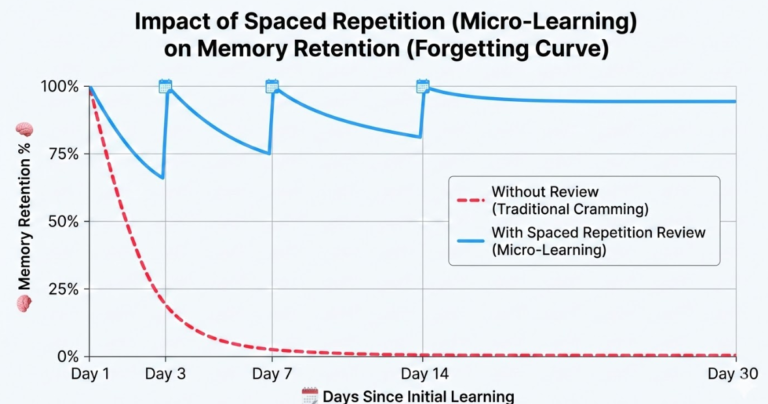
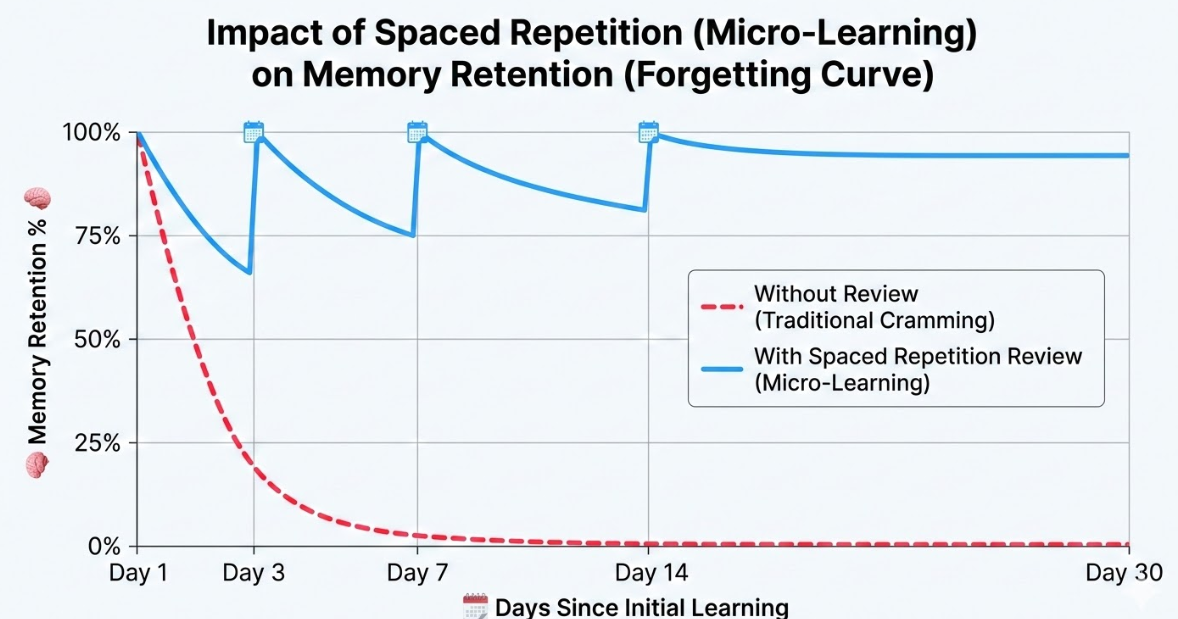
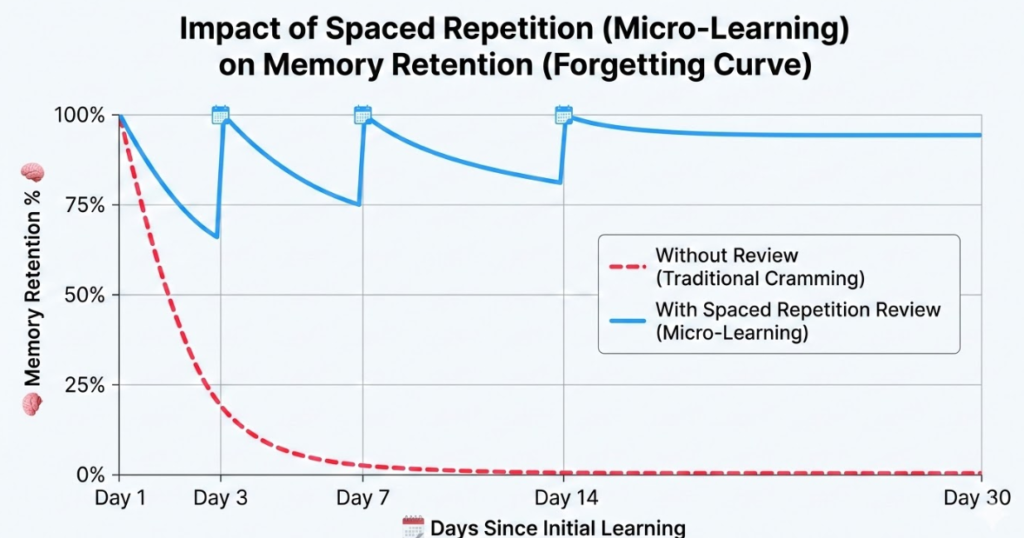
This process is closely linked to Spaced Repetition. When you learn a small concept and then revisit it a few hours or days later, you strengthen the neural pathways in your brain. This is far more effective than “cramming” the night before an exam, where information is usually forgotten within 24 hours. Whether you are a student or a professional, mastering a difficult subject requires these repeated, short bursts of high-intensity focus.
Applying Micro-Learning to Technical Fields
In technical sectors, the need for modular learning is even more apparent. For instance, if you were trying to understand the intricacies of Artificial Intelligence, you wouldn’t start by trying to build a robot. You would first look at the fundamental differences in Machine Learning vs Deep Learning to understand how data flows through different neural architectures; this specific distinction is a perfect example of a complex concept that must be broken down before moving to higher-level programming. Myassignmenthelp often sees students struggling with these technical hurdles because they try to learn the “whole” before the “parts.”
Comparing Traditional Learning vs. Micro-Learning
To understand why the global education shift is happening, we need to look at the data. Traditional “Macro-learning” is great for deep immersion, but it fails in terms of long-term retention for complex subjects.
| Feature | Traditional Macro-Learning | Modern Micro-Learning |
| Duration | 60–120 Minutes | 5–15 Minutes |
| Focus | Broad Overview | Single Learning Objective |
| Retention Rate | Lower (due to “The Forgetting Curve”) | Higher (due to Spaced Repetition) |
| Flexibility | Rigid Schedule | On-Demand / Mobile-Friendly |
| Cost | High (Institutional) | Low (Bite-sized / Modular) |
4. Strategies for Implementing Micro-Learning
To truly benefit from this method, you need a system. It isn’t just about watching short videos; it’s about active engagement. Here is how you can start today:
A. The 15-Minute Rule
Set a timer for 15 minutes. Focus on exactly one concept (e.g., “How to write a thesis statement” or “The Law of Diminishing Returns”). When the timer goes off, stop. This creates a “scarcity” mindset for your brain, making it focus harder because it knows the window of time is closing.
B. Modular Mapping
Take your large subject—whether it is a Law degree or a Marketing certification—and turn it into a checklist of 20 small questions. Instead of saying “I need to study Law today,” say “I will spend 10 minutes answering what ‘Duty of Care’ means.” Answer one question per session.
C. The “Spaced Repetition” Calendar
Don’t just learn a concept once. Schedule a 2-minute review of that concept for the next day, then three days later, then one week later. This “anchors” the knowledge.
The Role of Micro-Learning in Higher Education
Many UK universities are now integrating “Micro-credentials” into their degree programs. This is because the workplace is changing. Employers in 2026 value specific, verifiable skills over broad, vague degrees. By mastering complex subjects through small modules, students are better prepared for the “gig economy” and fast-paced corporate environments.
For students working on a Dissertation or a Master’s Thesis, micro-learning is a lifesaver. Instead of looking at a 10,000-word requirement, break it down:
- Module 1: Refining the Research Question (10 mins).
- Module 2: Identifying 3 Primary Sources (15 mins).
- Module 3: Drafting the Methodology Outline (15 mins).
By treating a massive project like a series of small “quests,” the brain releases dopamine upon each completion, making the process addictive rather than exhausting.
Overcoming the “Focus Crisis”
We live in an age of distractions. Social media has rewired our brains to expect short, fast bursts of information. While this is often seen as a negative, micro-learning actually leverages this new brain chemistry. Instead of fighting the urge to check your phone every 10 minutes, micro-learning says: “Fine, work for 10 minutes, then take a 2-minute break.”
This synergy between our current digital habits and our educational needs is why platforms that offer academic assistance are seeing such high success rates. They provide the “chunks” of information that students can actually digest, rather than the overwhelming textbooks of the past.
The Impact on Professional Development
It isn’t just students who benefit. Professionals in 2026 are using micro-learning to “upskill” without leaving their jobs. Whether it’s learning a new software, understanding a new tax law, or improving management skills, the “snackable” content model fits into a lunch break or a morning commute.
Case Study: Learning Data Science
If you try to learn Data Science in one go, you will fail. The math is too dense. But if you spend:
- Week 1: Only learning Python syntax.
- Week 2: Only learning Basic Statistics.
- Week 3: Only learning Data Visualization.
The complexity disappears. You are simply stacking bricks until you have a house.
Why 2026 is the Year of the “Snackable” Knowledge
As we move further into the decade, the traditional four-year degree is being supplemented by these agile learning methods. Employers no longer just want to see a diploma; they want to see that you can master specific skills quickly. Micro-learning allows you to build a portfolio of expertise in real-time. It’s about being agile.
If you are struggling with a massive dissertation or a complex case study, remember that you don’t have to climb the whole mountain in one leap. By utilizing professional academic support and breaking your workload into micro-tasks, you ensure that the quality of your work remains high while your stress levels stay low.
The Psychology of Achievement
One of the most overlooked benefits of micro-learning is the psychological boost. When you finish a 10-minute module, you feel a sense of accomplishment. This “Win-State” encourages you to do another module. In contrast, when you study for four hours and still feel like you haven’t finished the chapter, you feel like a failure. Micro-learning builds the habit of success.
Summary Checklist for Micro-Learning Success
To ensure you are mastering your subjects effectively, follow this checklist:
- Objective: Is my goal for this 10-minute session specific? (e.g., “Define X”).
- No Multitasking: Is my phone in another room for these 10 minutes?
- Active Recall: Can I explain what I just learned to a 10-year-old?
- Feedback: Have I checked my understanding against a reliable source or expert?
Conclusion: Small Steps, Big Results
The path to mastering a complex subject is paved with small stones. By embracing micro-learning, you aren’t just making your life easier—you are aligning your study habits with the way your biology actually functions. Stop fighting your brain’s natural limits and start working with them.
The future of education isn’t about who can sit in a library the longest; it’s about who can learn, unlearn, and relearn the most efficiently. Whether you’re learning a new language, a coding framework, or finishing a university module, the “bite-sized” approach is your secret weapon for success in the modern world. Small modules lead to big breakthroughs.
Frequently Asked Questions
What is the ideal length for a micro-learning session? Most research suggests that 5 to 15 minutes is the “sweet spot.” This duration is short enough to maintain intense focus without overtaxing your working memory, making it easier to retain specific concepts.
Can micro-learning replace traditional university degrees? Rather than replacing them, it serves as a powerful supplement. While degrees provide broad theoretical foundations, modular learning helps students master specific, high-level skills and manage heavy workloads more efficiently.
How does this method help with long-term memory? It relies on the principle of spaced repetition. By breaking topics into small parts and reviewing them at increasing intervals, you move information from short-term “cramming” into stable, long-term neural pathways.
Is micro-learning effective for highly technical subjects? Yes. In fact, it is often the best way to tackle complex fields like data science or law. By mastering one small technical rule or formula at a time, you build the necessary foundation to understand the larger, more difficult system.
About The Author
Ella Thompson is a dedicated academic strategist and lead consultant at myassignmenthelp. With a passion for modern pedagogy, Ella focuses on helping students navigate the complexities of higher education by bridging the gap between traditional learning and innovative digital resources. When not developing educational frameworks, Ella enjoys exploring the intersection of technology and student productivity.
About the Author