
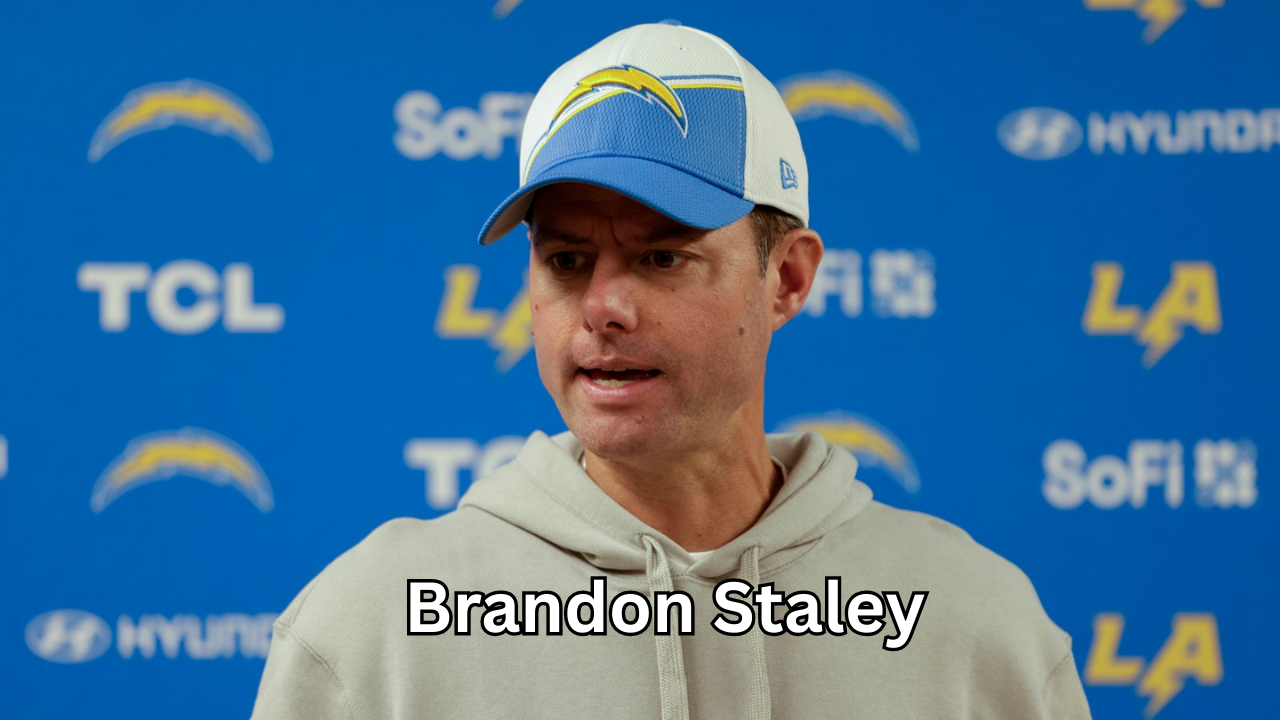
Brandon Staley has become one of the most talked-about names in modern NFL coaching. Known for his aggressive decision-making, defensive innovation, and bold fourth-down calls, Staley quickly rose through the coaching ranks to become a head coach in the National Football League. Whether fans admire his analytical mindset or question his risk-taking strategies, one thing is clear: Brandon Staley has made a significant impact on professional football.
In this in-depth article, we explore Brandon Staley’s early life, coaching journey, defensive philosophy, time as an NFL head coach, key achievements, challenges, and what the future may hold for him in the league.
Early Life and Football Background
Brandon Staley was born on December 10, 1982, in Perry, Ohio. Growing up in a sports-oriented family, Staley developed a strong connection with football at a young age. His father, Bruce Staley, was a high school basketball coach, which helped shape Brandon’s competitive mindset and understanding of team leadership.
Staley played college football at the University of Dayton, where he was a quarterback. Although he did not have a high-profile playing career, his experience as a quarterback gave him a deep understanding of offensive schemes. This knowledge would later help him design defensive systems capable of countering complex NFL offenses.
His transition from player to coach was smooth, as he quickly realized that his passion lay in strategy, preparation, and game planning.
Early Coaching Career and Climb Through the Ranks
Brandon Staley’s coaching journey did not begin in the spotlight. Like many successful coaches, he started at smaller programs and worked his way up. He began as a graduate assistant at Northern Illinois in 2007 before coaching at several small colleges, including St. Thomas and Hutchinson Community College.
These early years were crucial in shaping his identity as a coach. Staley learned to adapt with limited resources, refine defensive schemes, and focus on player development. His time at John Carroll University further strengthened his reputation as a defensive specialist.
Staley’s big break came when he entered the NFL coaching pipeline. In 2017, he joined the Chicago Bears as an outside linebackers coach under head coach Matt Nagy and defensive coordinator Vic Fangio. Working with Fangio had a major influence on Staley’s defensive philosophy.

Breakthrough with the Los Angeles Rams
Brandon Staley’s career truly accelerated in 2020 when he was hired as the defensive coordinator for the Los Angeles Rams under head coach Sean McVay. That season, the Rams had the number one ranked defense in the NFL.
Staley’s defensive scheme emphasized versatility, disguise, and adaptability. Instead of relying on traditional defensive structures, he implemented a system that focused on two-high safety looks and flexible fronts. This approach confused quarterbacks and limited explosive plays.
Under Staley’s leadership, the Rams defense excelled in points allowed, total yards allowed, and passing defense. His ability to maximize star players like Aaron Donald and Jalen Ramsey showcased his talent for building schemes around personnel strengths.
The success of the Rams’ defense in 2020 made Brandon Staley one of the hottest coaching candidates in the NFL.
Becoming Head Coach of the Los Angeles Chargers
In January 2021, Brandon Staley was hired as the head coach of the Los Angeles Chargers. At just 38 years old, he became one of the youngest head coaches in the league.
The Chargers saw Staley as a modern thinker who could complement their franchise quarterback, Justin Herbert. His defensive background, combined with an aggressive analytical approach, aligned with the direction the NFL was heading.
From the start, Staley made headlines for his bold fourth-down decisions. Unlike traditional coaches who often punted in uncertain situations, Staley trusted data and probability models to justify aggressive plays.
This aggressive mindset sparked debate among analysts and fans. Some praised his forward-thinking approach, while others criticized him when high-risk decisions did not pay off.
Coaching Philosophy and Defensive Identity
Brandon Staley’s coaching philosophy centers on adaptability and situational awareness. He believes in preparing his team for multiple scenarios rather than relying on rigid systems.
Defensively, his schemes prioritize preventing explosive plays. Instead of stacking the box to stop the run at all costs, Staley often relies on light boxes and two safeties deep to defend against big passing plays. This approach forces offenses to execute long, methodical drives.
His system requires disciplined players who understand positioning, leverage, and communication. When executed properly, it can frustrate elite quarterbacks.
Offensively, while Staley is not an offensive coordinator, he emphasizes collaboration with his offensive staff. His goal as a head coach has been to create a balanced team that can compete in high-scoring matchups.
Challenges and Criticism
Despite early promise, Brandon Staley faced significant challenges during his tenure as head coach. The Chargers showed flashes of brilliance but struggled with consistency.
One of the most difficult moments came during the 2022 playoffs, when the Chargers surrendered a large lead in a Wild Card game. The loss intensified criticism of Staley’s game management and defensive adjustments.
Injuries also played a role in the team’s uneven performance. The Chargers dealt with multiple injuries to key players, which impacted both offensive and defensive consistency.
Critics questioned whether Staley’s defensive schemes were too complex or whether his aggressive decisions sometimes put unnecessary pressure on the team.
However, supporters argue that innovation often comes with growing pains, and that Staley’s analytical mindset reflects the future of football rather than outdated traditions.
Leadership Style and Player Relationships
Brandon Staley is known for being energetic, communicative, and detail-oriented. Players often describe him as passionate and transparent.
He emphasizes accountability and preparation. Practices under Staley focus heavily on situational football, ensuring players understand game context rather than simply memorizing plays.
His background as a quarterback helps him communicate effectively with offensive players, especially when discussing defensive strategy and opponent tendencies.
Strong leadership in the NFL requires balancing relationships with performance expectations. Staley’s challenge has been maintaining trust while navigating high-pressure results-driven environments.
Statistical Impact and Team Performance
During his time as a head coach, the Chargers displayed one of the league’s most aggressive fourth-down approaches. This strategy led to higher conversion attempts compared to league averages.
Defensively, performance fluctuated from season to season. While the Chargers had moments of dominance, they also struggled with run defense consistency and late-game execution.
However, statistics alone do not always tell the full story. The NFL is highly competitive, and small margins often determine outcomes. Staley’s teams remained competitive in one of the league’s toughest divisions.
What Sets Brandon Staley Apart
Several qualities distinguish Brandon Staley from other NFL coaches.
First, his rapid rise through coaching ranks demonstrates adaptability and learning ability. Few coaches move from small college programs to NFL head coach within such a short timeframe.
Second, his commitment to analytics separates him from more traditional decision-makers. He embraces modern data-driven football strategies rather than relying solely on instinct.
Third, his defensive creativity has influenced how teams approach modern passing offenses. The two-high safety structure he popularized has been adopted across the league as teams attempt to slow down explosive quarterbacks.

The Future of Brandon Staley in the NFL
The NFL is a results-driven league, and coaching careers often depend on wins and playoff success. Even with setbacks, Brandon Staley remains respected for his football intelligence and innovative mindset.
Whether as a head coach or defensive coordinator, his understanding of modern offensive systems makes him valuable. Teams looking to modernize their defense or incorporate analytics-driven decision-making may see Staley as an asset.
Coaches often evolve after early challenges. Many successful NFL head coaches experienced difficult seasons before finding sustained success. If given the right environment and roster stability, Staley has the potential to refine his approach and achieve long-term success.
Why Brandon Staley Remains a Relevant NFL Figure
Brandon Staley represents a new generation of NFL leadership. Younger, analytically inclined, and adaptable, he embodies the direction in which professional football is moving.
As offenses become faster and more pass-oriented, defensive coaches must innovate constantly. Staley’s willingness to experiment and challenge traditional thinking keeps him relevant in league conversations.
Fans and analysts will continue to debate his decisions, but innovation often sparks debate before it gains acceptance.
Final Thoughts on Brandon Staley
Brandon Staley’s journey from small-college assistant to NFL head coach is a testament to persistence, preparation, and football intelligence. His defensive creativity, aggressive mindset, and leadership qualities have left a mark on the league.
While his head coaching tenure has faced criticism and challenges, his influence on modern defensive schemes cannot be ignored. The NFL constantly evolves, and coaches like Brandon Staley play a major role in shaping its future.
As the next chapter of his career unfolds, one thing is certain: Brandon Staley will remain an important name in professional football discussions. Whether leading a team from the sidelines or designing a dominant defense, his strategic mind ensures he will continue to impact the game for years to come.
Also Read: Snapjotz com: Everything You Need to Know About This Trending Platform
About the Author




1 thought on “Brandon Staley: Coaching Philosophy, NFL Journey, and What’s Next for the Defensive Mind”
Comments are closed.